Interview
Elvis Mikac
Croatia (Hrvatska)
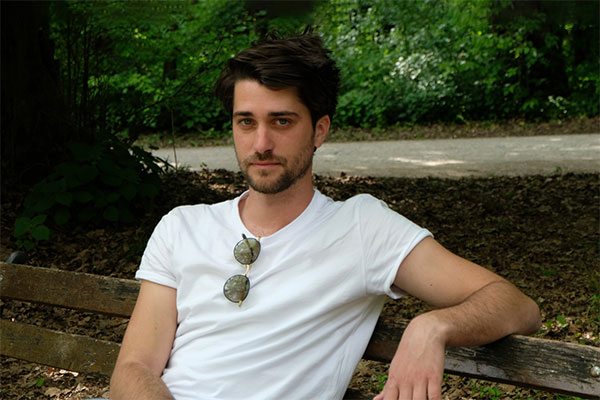
Elvis Mikac is a Croatian photographer whose work explores light, atmosphere, and the quiet beauty of everyday spaces. Guided by a minimalist approach, he creates thoughtful images that balance simplicity, form, and emotion.
1 Congratulations on winning in the MUSE Photography Awards! Can you share a little about yourself, what inspired you to pursue photography, and how has your journey evolved since your first shot?
I am an amateur photographer from Croatia, focused on light, atmosphere, and quiet moments within everyday spaces.
My work is closely connected to art, as I often photograph and document artworks created by my wife, who is an academic artist. This has strongly influenced my visual approach, especially in terms of composition, balance, and sensitivity to form.
Over time, my photography has become more intentional, exploring minimalism and the relationship between structure and natural light.
2 Can you share the story or inspiration behind your award-winning piece? How does winning this award make you feel about your journey in photography?
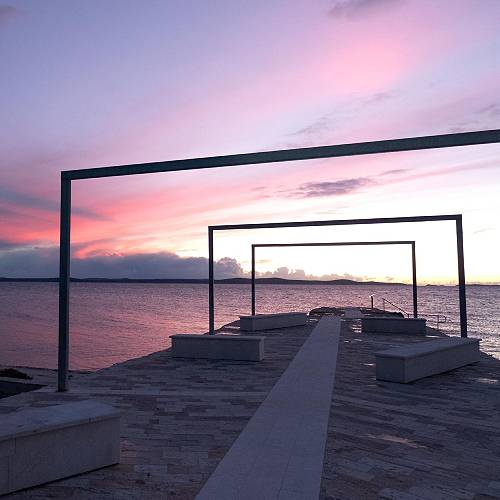
“Altare della Luce” came from an unexpected moment. I originally went to photograph my wife and her artwork at a villa on the Adriatic coast. However, there was a power outage, and without lighting, the planned shoot became impossible.
Later that evening, as we were heading out for dinner, I noticed a striking sunset. On our way back, while there was still light on the horizon, I decided to return and photograph the space again—this time using only natural light.
In that moment, the scene transformed completely. The structure, the sea, and the fading light came together to create something more symbolic, which led to the creation of “Altare della Luce.”
This experience reminded me that sometimes the best images come not from planning, but from being present and ready to recognize the moment.
3 How do you decide which photo to submit for a competition?
I choose images that are not only visually strong but also convey a clear idea or emotion. If a photograph succeeds both as a composition and as a concept, I consider it suitable for competition.
4 What first made you pick up a camera?
I picked up a camera out of curiosity, wanting to capture moments that felt visually calm and meaningful. Over time, photography became a way for me to observe, understand, and simplify the world around me.
5 What’s your favorite type of photography, and why do you love it?
I am most drawn to minimalist and conceptual photography because it allows me to reduce scenes to their essence and focus on light, space, and emotion.
6 What’s your go-to camera setup, and why does it work best for your projects? What’s your favorite feature?
I work primarily with a Fujifilm X-T2, which suits my approach to color and light very well. I also enjoy using vintage manual lenses such as the Pentax 50mm and Jupiter 37A, as they bring a unique character and softness that complement minimalist compositions.
In addition to my own work, I often photograph and document artworks created by my wife, who is an academic artist. This experience has influenced my sensitivity to composition, detail, and visual balance.
My setup is intentionally simple, allowing me to focus on timing, composition, and atmosphere.
7 If someone looked at your work, what’s the one thing you’d want them to feel?
A sense of calm and stillness. I want viewers to pause and experience the space, rather than simply look at it.
8 What was the most challenging part of capturing your winning shot?
The biggest challenge was timing the light and keeping the composition perfectly balanced while maintaining simplicity. Minimalist scenes leave no room for error.
9 Is there a specific place or subject that inspires you the most?
Coastal environments inspire me the most, especially where architecture meets the sea and horizon. These spaces naturally create a sense of openness and transition.
10 Who or what has been your biggest influence in photography?
My biggest influence is the environment itself—light, space, and silence. I am influenced more by atmosphere than by specific photographers.
11 What message would you share to inspire photographers to participate in photography awards, and what advice would you give to help them excel in the competition?
Trust simple ideas. You don’t need complexity to create strong work—clarity and intention matter more than anything else.
12 What’s one piece of advice for someone just starting in photography?
Focus on composition and light before gear. Learning to see is more important than the equipment you use.
13 What role do editing and post-processing play in your creative workflow?
Editing plays an important but subtle role in my workflow.
Through working on both my own photography and documenting my wife’s artwork, I have developed a careful approach to preserving tones, textures, and the original atmosphere of a scene.
14 How do you see technology, like AI, influencing the future of photography and your own approach?
Technology, including AI, will change photography, but the core remains the same: vision and intention. Tools evolve, but the photographer’s eye is what defines the work.
15 If you could photograph anything or anyone in the world, what would it be?
I would continue exploring spaces where minimal architecture meets nature, especially along coastlines. These environments offer endless variations of light, silence, and balance.