Interview
Martina Prsa
Slovenia
Martina Prsa is a fine art photographer whose work explores the interplay of light, emotion, and the hidden beauty found in everyday moments. Drawn to photography as a form of expression, she creates poetic and introspective images that transform ordinary scenes into compelling visual stories.
1 Congratulations on winning in the MUSE Photography Awards! Can you share a little about yourself, what inspired you to pursue photography, and how has your journey evolved since your first shot?
Thank you so much. I am a fine art photographer from Slovenia, driven by a deep curiosity for light, emotion, and the hidden beauty within ordinary moments.
I was drawn to photography as a way to express what I couldn’t always put into words. Over time, it became more than simply capturing reality—it evolved into a form of visual storytelling, allowing me to transform simple scenes into something more introspective and poetic.
My journey has been highly intuitive. I didn’t follow a strict path; instead, I explored, experimented, and gradually developed my own voice. From my first photographs to today, the biggest change has not been technical—it has been the way I see. I have learned to trust my instincts, to feel an image before I even take it, and to allow my work to reflect both the visible and emotional layers of a moment.
2 Can you share the story or inspiration behind your award-winning piece? How does winning this award make you feel about your journey in photography?
My award-winning works come from two very different yet deeply connected places within my creative process.
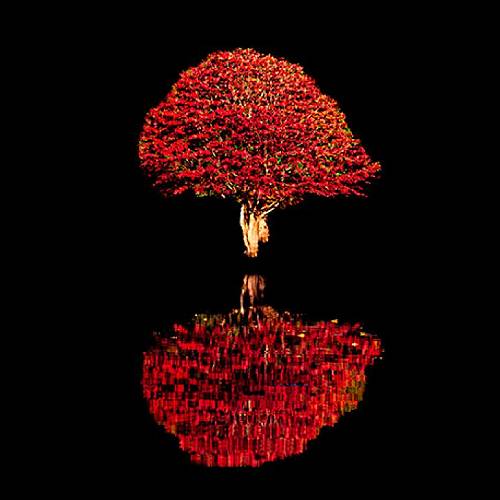
Reflect into Darkness was inspired by the idea of duality—the visible and the hidden, the surface and what lies beneath. I was drawn to the simplicity of form and reflection, and to the way something minimal can still carry profound emotional depth. It is a quiet, introspective piece.
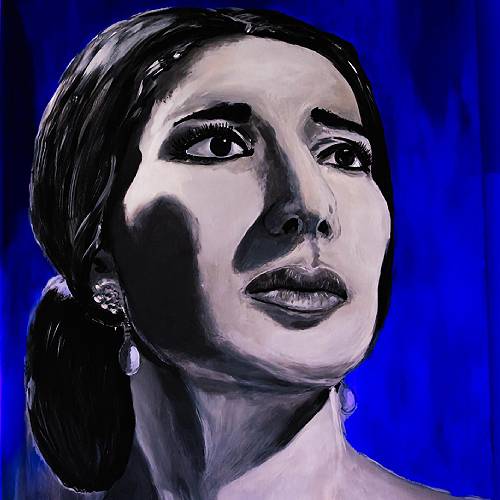
The Diva has a different origin. It began as a painting, which I later transformed into a photographic work through my creative process. This piece allowed me to merge traditional art with photography, exploring expression, identity, and presence in a more layered way. It reflects my interest in moving beyond a single medium and using photography as a space where different forms of art can meet.
Winning this award with two such distinct works means a great deal to me. It validates not only my versatility but also my desire to experiment and push beyond the boundaries between disciplines. It gives me the confidence to continue trusting my intuition and evolving freely as an artist.
3 How do you decide which photo to submit for a competition?
Choosing which work to submit is a very intuitive process for me. I don’t rely solely on technical perfection—I look for an image that evokes a strong emotional response and stays with me long after I have stepped away from it.
Usually, it is the photograph I keep returning to, the one that creates a certain emotional tension or quiet presence. I ask myself whether it can stand on its own without explanation and whether it invites viewers to experience something personal.
I also consider how the image reflects my artistic voice. Rather than trying to fit a particular trend or category, I choose the work that feels most authentic to me in that moment. In the end, it is about trust—trusting my instincts and allowing the image to speak for itself.
4 What first made you pick up a camera?
I first picked up a camera to photograph the handmade beaded jewelry I was creating at the time. It began simply as a way to document my work.
Before long, however, I found myself drawn beyond the objects themselves. I became fascinated by how light, composition, and perspective could completely transform even the smallest detail. What started as documentation soon became a process of exploration.
That curiosity led me deeper into photography, eventually evolving into a true passion and a form of artistic expression. I realized that through the camera, I was not simply capturing objects—I was creating mood, emotion, and atmosphere.
5 What’s your favorite type of photography, and why do you love it?
I am especially drawn to fine art photography that focuses on light, detail, and atmosphere. I enjoy working with close-up and minimalist compositions, where even the smallest element can carry a strong emotional presence.
At the same time, photographing horses is a very important part of my work. As a rider myself, I have developed a deeper understanding of their movement, sensitivity, and character. There is something incredibly powerful and authentic in their presence—a natural elegance and emotion that I experience both as a rider and as a photographer.
What I love most about photography is its ability to transform both subtle details and a powerful living presence into something more poetic. For me, it is always about emotion, whether it emerges from a minimalist scene or a compelling subject.
6 What’s your go-to camera setup, and why does it work best for your projects? What’s your favorite feature?
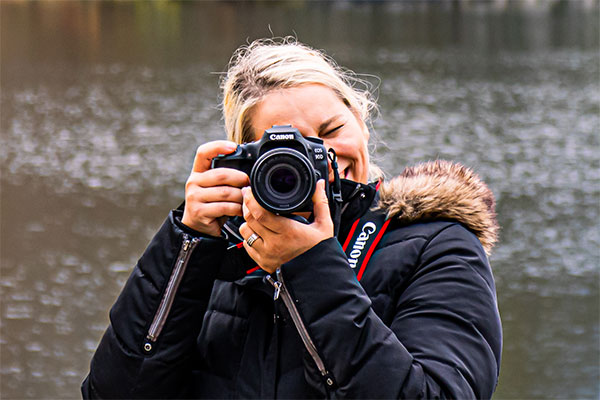
My go-to setup is a Canon EOS 90D, usually paired with a 50mm prime lens, a macro lens, or a telephoto zoom, depending on the subject I am photographing.
What matters most to me is flexibility and control, which is why I always shoot in manual mode. It allows me to fully shape the image—from light and depth to mood—instead of relying on automatic settings. Especially when working with natural light or challenging conditions, manual mode gives me the freedom to adapt intuitively.
My favorite feature, if I can call it that, is precisely this sense of control. Being able to consciously adjust every element of the exposure helps me translate what I feel into the final image. It makes the process more intentional and more closely connected to my vision.
7 If someone looked at your work, what’s the one thing you’d want them to feel?
If someone looks at my work, I want them to lose themselves in it for a moment—to step away from reality and enter a different space.
I hope they can discover their own story within the image, something personal that resonates with their emotions or memories. I do not want to dictate what they should see or feel. Instead, I aim to create a space where they can pause, reflect, and immerse themselves in their own interpretation.
8 What was the most challenging part of capturing your winning shot?
It is difficult for me to identify a single challenge, because my process is highly intuitive and often driven more by inspiration than by obstacles.
I am usually inspired in the moment of creation, but a significant part of my process takes place later, when I review the images on my computer. That is often when I truly recognize their potential and begin shaping them into something more powerful. It is during this stage that I transform a simple capture into a finished work with greater emotional and visual impact.
Rather than pointing to one specific challenge, I would describe the process as an evolution—from instinct, to discovery, to transformation.
9 Is there a specific place or subject that inspires you the most?
I am inspired by whatever captures my attention in the moment. It may be a small detail, a particular quality of light, or a quiet atmosphere—something that resonates with me instinctively, without overthinking it.
That said, horses hold a very special place in both my work and my life. They inspire me not only visually but emotionally as well. There is a depth, sensitivity, and strength in them that I find incredibly moving, and I am continually drawn to capturing that presence through my photography.
10 Who or what has been your biggest influence in photography?
I do not have one specific person or artist whom I would consider my greatest influence. Instead, I focus on developing my own voice and continually growing with every image I create.
For me, the process is deeply personal. I am inspired more by the act of seeing, feeling, and evolving than by following a particular style or direction. Each photograph is an opportunity to learn something new and take another step toward expressing my vision more clearly.
11 What message would you share to inspire photographers to participate in photography awards, and what advice would you give to help them excel in the competition?
Photography awards can be a powerful source of motivation and encouragement. They provide a sense of direction and reassurance that you are on the right path.
For me, they are not only about recognition but also about growth. They encourage you to reflect on your work, select your strongest images, and present your vision with purpose.
My advice is to approach them with authenticity. Choose the work that truly represents who you are, rather than what you think will win. When your work is honest, it carries far greater impact.
12 What’s one piece of advice for someone just starting in photography?
Don’t be afraid to start and make mistakes. They are a natural and necessary part of the creative process.
In the beginning, it is easy to doubt yourself or feel that your work is not good enough, but every photograph you take is a step forward. The most important thing is to keep going, keep experimenting, and allow yourself the freedom to grow.
Over time, those mistakes become your greatest teachers, helping you develop your own unique perspective and way of seeing.
13 What role do editing and post-processing play in your creative workflow?
Editing and post-processing play a very important role in my creative workflow.
As an artist, I see photography as more than simply capturing a moment—it is the beginning of a creative journey. I enjoy taking a simple, ordinary image and transforming it into something more: a story, a mood, or an emotional experience.
This is where my artistic vision truly comes to life. Through editing, I shape the atmosphere, enhance the emotion, and bring the image closer to what I imagined or felt in that moment. For me, it is not merely a technical step but an essential part of the creative process.
14 How do you see technology, like AI, influencing the future of photography and your own approach?
I see technology, including AI, as a tool—a creative companion rather than a replacement.
It can offer new possibilities, help streamline certain processes, and open the door to experimentation. At the same time, I believe the heart of photography will always remain human: the emotion, vision, and intention behind the image.
In my own work, I see it as a complement to the creative process rather than a substitute for it. The essence of what I create comes from within, and that is something no technology can truly replicate.
15 If you could photograph anything or anyone in the world, what would it be?
I believe that when I find the right subject, I will simply know.
For me, it has never been about a specific person or place, but rather a feeling—that moment when something truly resonates. When that connection occurs, it often feels as though the subject finds me rather than the other way around.